Porcelain Veneers
Porcelain veneers are thin ceramic shells that are bonded to the front surface of a tooth, restoring its natural appearance while providing strength and durability. They can be used to address a range of concerns, including worn enamel, slightly crooked teeth, gaps, chips, and cracks.
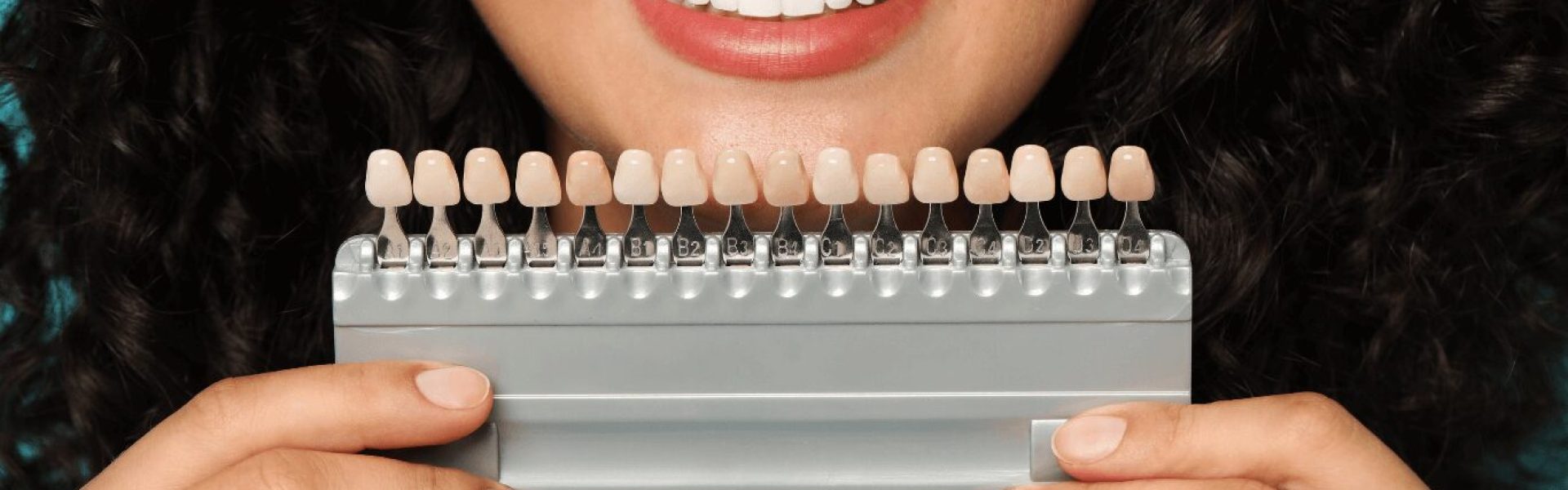
Veneers are custom-made in both shape and colour, allowing you to work with your dentist to design your ideal smile. With the right shade, porcelain veneers can achieve a beautifully natural result—creating a bright, symmetrical smile. A key advantage of porcelain veneers is that they are resistant to discolouration over time.
Composite Veneers
Composite veneers are created by applying tooth-coloured composite material directly to the teeth. This option is often used to correct minor imperfections quickly and effectively. In many cases, little to no preparation is required, making the process entirely additive.
While composite veneers are more affordable and convenient, it is important to note that they are less durable than porcelain and are more likely to stain over time.